

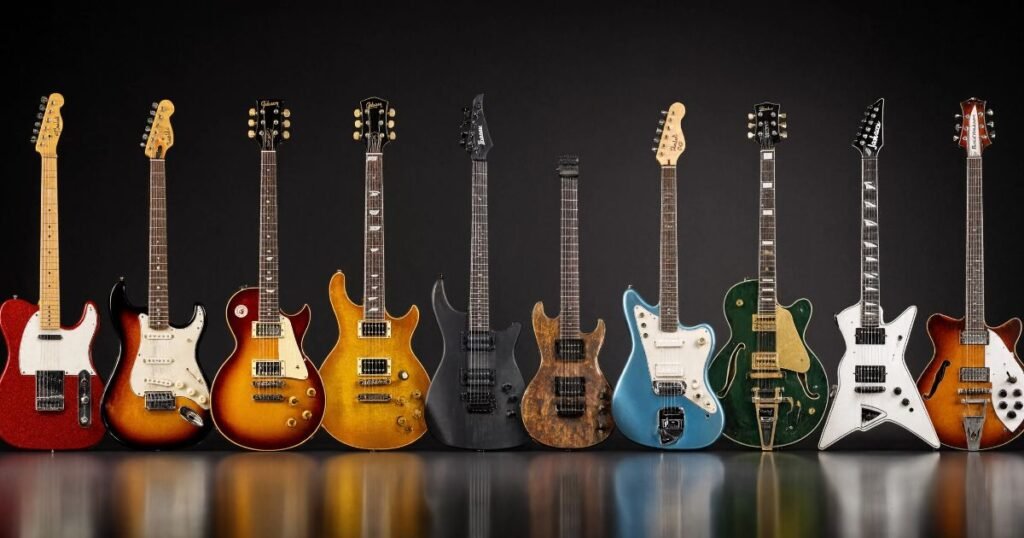
Choosing the Best Electric Guitar can feel difficult because every player has different needs. Some guitarists want vintage tone and classic styling. Others prefer modern playability, powerful humbuckers, lightweight bodies, or a comfortable neck for long practice sessions.
The good news is that there is no single guitar that is perfect for everyone. The right choice depends on your playing style, experience level, preferred sound, budget, and the features you actually need.
In this guide, we review 10 popular models, including the Fender American Ultra II Tele, Sterling By Music Man Intro Series Cutlass, Squier Sonic Mustang, Ibanez GRGM21M-BLT, PRS SE Custom 24, Epiphone Les Paul Special, Gibson Les Paul Studio Session, Guild Polara Deluxe, Fender Vintera II 60s Stratocaster, and Gibson ES Supreme.
The goal is simple. We want to help you understand what makes each model different so you can make a confident buying decision.
Note: Guitar specifications, finishes, and availability can vary by production year, region, and specific version. Always confirm the current specifications with the manufacturer before purchasing.
What Makes the Best Electric Guitar?
The Best Electric Guitar should match the way you actually play. A beginner may benefit from a comfortable neck and simple controls, while an experienced musician may prioritize premium electronics, advanced switching, or professional-level construction.
Several factors deserve attention before you choose.
- Neck comfort: A comfortable neck makes practice easier and more enjoyable.
- Pickup type: Single-coils often provide clarity and bite, while humbuckers generally offer a thicker and fuller sound.
- Scale length: Scale length affects string tension and playing feel.
- Body shape: The guitar should feel comfortable while sitting and standing.
- Bridge design: Fixed bridges are simple, while tremolo systems provide pitch movement.
- Build quality: Good fretwork, hardware, and electronics can improve the overall playing experience.
- Musical style: Blues, rock, metal, country, pop, jazz, and indie players may prefer different designs.
The best approach is to choose based on your musical goals instead of simply choosing the most expensive model.
How We Chose These Electric Guitars?
A useful guitar comparison should look beyond brand popularity. For this list, the main considerations are playability, construction, pickup design, versatility, ergonomics, controls, and the type of player each guitar is designed to serve.
Manufacturer specifications are particularly useful because they provide objective information about materials, scale length, pickup configuration, fret count, and hardware.
For example, Fender lists the American Ultra II Telecaster with a 25.5-inch scale, 22 frets, a Modern “D” neck, a 10–14-inch compound radius, and Ultra II Noiseless Vintage Tele pickups.
PRS similarly lists the SE Custom 24 with a 25-inch scale, 24 frets, a Wide Thin neck, maple top, mahogany back, rosewood fingerboard, and 85/15 “S” pickups on the current model page.
These details matter because they directly affect the guitar’s feel and versatility.
1. Fender American Ultra II Tele:
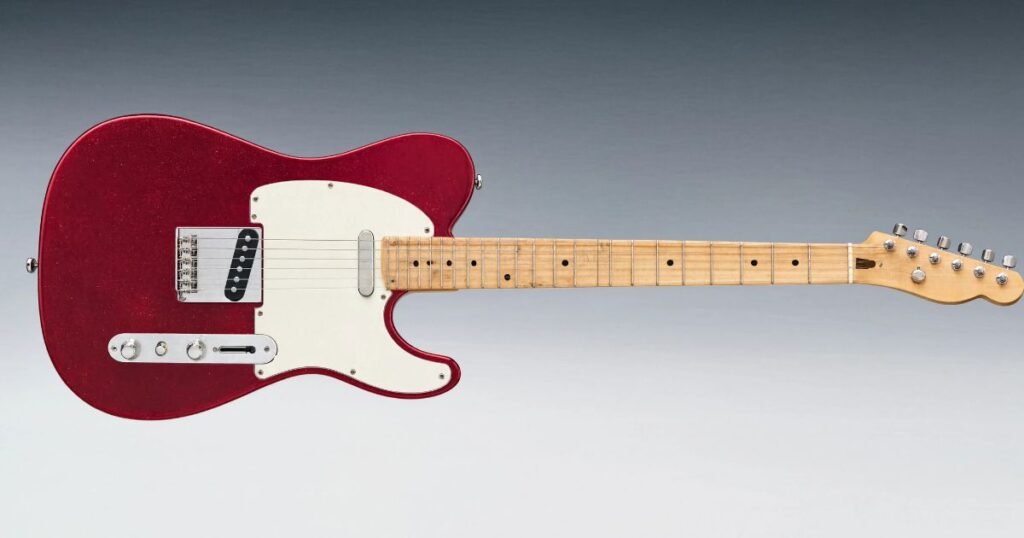
The Fender American Ultra II Telecaster is a premium modern interpretation of the classic Telecaster design. It is aimed at players who want traditional Fender character combined with contemporary playability and hardware.
Its Ultra II Noiseless Vintage Tele pickups are designed to provide familiar Tele-style tones while reducing unwanted noise. Fender also includes an S-1 switch that activates a series wiring option, adding another tonal possibility.
The neck is another major attraction. Fender specifies a Modern “D” profile, quartersawn maple construction, medium-jumbo frets, and a compound 10–14-inch fingerboard radius. The guitar has 22 frets and a 25.5-inch scale length.
Why it stands out?
The American Ultra II Tele is especially appealing to players who want a versatile professional instrument without abandoning the familiar Telecaster identity.
It can work well for:
- Country
- Blues
- Rock
- Pop
- Studio work
- General-purpose live performance
The six-saddle string-through hardtail bridge also provides a straightforward playing experience.
Best for: Experienced players seeking a premium, modern Telecaster.
2. Sterling By Music Man Intro Series Cutlass:
The Sterling By Music Man Intro Series Cutlass is designed around a modern interpretation of the traditional double-cut electric guitar. Its shape and layout make it a practical option for players who want a versatile instrument without moving into a very expensive professional price category.
The Cutlass family is particularly interesting for guitarists who like the general concept of classic S-style guitars but want a modern alternative. Its design is suitable for players who regularly move between clean tones, blues, pop, rock, and other common guitar styles.
One of the biggest advantages of this type of guitar is versatility. A three-pickup configuration can give a player several tonal positions, making it easier to create contrasting sounds without changing instruments.
Who should consider it?
This guitar can be a good fit for:
- Beginners moving toward intermediate playing
- Players who want an S-style design
- Guitarists who need multiple pickup sounds
- Musicians building their first serious electric guitar setup
It is also worth considering for players who care about ergonomic comfort. The traditional double-cut silhouette gives good access around the upper part of the neck while remaining familiar to many guitarists.
Best for: Players who want a versatile modern S-style guitar.
3. Squier Sonic Mustang:
The Squier Sonic Mustang is an appealing choice for beginners and players who prefer a compact, distinctive guitar design. The Mustang shape has a strong connection with alternative, indie, garage, and rock music, but it can also be used in many other styles.
A major advantage of a shorter-scale guitar is the playing feel. Shorter-scale instruments can feel more relaxed under the fretting hand, which some beginners find comfortable.
The Mustang shape is also visually different from a traditional Stratocaster or Telecaster. That can be attractive to players who want an instrument with more personality.
Why beginners may like it?
A beginner needs a guitar that encourages regular practice. Comfortable ergonomics, manageable weight, accessible controls, and a neck that feels natural can make a major difference.
The Squier Sonic range is positioned as an accessible entry point into the Fender family. That makes the Sonic Mustang worth considering for someone searching for an affordable electric guitar without choosing an unfamiliar brand.
It can also work well as a secondary guitar for experienced musicians who enjoy shorter-scale instruments and alternative styling.
Best for: Beginners, indie players, and guitarists who prefer a compact Mustang-style design.
4. Ibanez GRGM21M-BLT:
The Ibanez GRGM21M-BLT belongs to the compact Mikro family and is especially interesting for younger players, players with smaller hands, and guitarists who want a shorter instrument.
Its reduced scale length changes the overall playing feel compared with a traditional full-scale electric guitar. This can make stretches easier and may feel more approachable for beginners.
Ibanez is also strongly associated with modern rock and heavier guitar styles, so this model has a natural appeal for players who enjoy that musical direction.
What makes it different?
The biggest difference is its compact format. A smaller guitar can be easier to handle in bedrooms, practice spaces, or situations where portability matters.
However, players should remember that a compact guitar can feel different from a full-size instrument. If you plan to move between guitars frequently, it may take some adjustment.
The GRGM21M-BLT is therefore less about being a universal replacement for every full-size guitar and more about offering a comfortable, compact alternative.
Best for: Smaller players, beginners, and guitarists who want a compact electric guitar.
5. PRS SE Custom 24:
The PRS SE Custom 24 is one of the most versatile choices on this list. It combines a classic double-cut body shape with modern features and a broad tonal range.
PRS currently lists the SE Custom 24 with a maple top, mahogany back, maple neck, rosewood fingerboard, 24 frets, and a 25-inch scale length. Its Wide Thin neck shape is designed for comfortable access across the fingerboard.
The guitar also uses PRS 85/15 “S” pickups on the current standard SE Custom 24 specification. PRS describes these pickups as offering clarity and extended high and low frequencies.
Why it is so versatile:
The combination of two humbuckers, a three-way pickup selector, and push/pull tone control gives players plenty of tonal flexibility.
The 24-fret layout also provides two extra frets compared with many traditional 22-fret guitars.
It is suitable for:
- Rock
- Blues
- Pop
- Fusion
- Alternative
- Modern worship
- Studio recording
Best for: Players who want one guitar capable of handling many styles.
6. Epiphone Les Paul Special:
The Epiphone Les Paul Special is a strong choice for players who want the familiar Les Paul concept in a more accessible package.
The Les Paul design is known for its substantial feel, mahogany-based construction in many versions, and humbucker-oriented sound. The Special name generally represents a simpler approach than higher-end Les Paul models.
This simplicity can actually be an advantage. Players who do not need complex switching systems may prefer a straightforward control layout.
What type of player should choose it?
The Les Paul Special is particularly attractive to players interested in rock and blues. Humbucker-equipped Les Paul-style guitars tend to deliver a fuller and thicker character than traditional single-coil designs.
It can also be a useful guitar for beginners who already know they prefer the feel and sound of a Les Paul-style instrument.
Before purchasing, check the exact model year and version because Epiphone has produced several Les Paul Special configurations.
Best for: Rock and blues players who want a straightforward Les Paul-style guitar.
7. Gibson Les Paul Studio Session:
The Gibson Les Paul Studio Session represents a more premium choice for musicians who want Gibson construction and the familiar Les Paul platform with a practical studio-oriented approach.
A professional-level guitar can be especially useful for musicians who record regularly. Consistent fretwork, stable hardware, comfortable setup, and dependable electronics can become more important as playing demands increase.
The Les Paul platform is particularly well known for sustaining notes and producing thick, powerful tones. It can cover rock, blues, hard rock, pop, and many studio applications.
Why choose a Gibson?
Gibson occupies a significant place in electric guitar history. For some players, the attraction is not only the sound but also the traditional construction, design, and playing experience associated with the brand.
The Studio Session is therefore aimed at musicians who want more than a basic beginner instrument.
Best for: Experienced guitarists and recording musicians who want a premium Les Paul-style instrument.
8. Guild Polara Deluxe:
The Guild Polara Deluxe is an excellent choice for guitarists who want something outside the most common Fender and Gibson shapes.
Its distinctive body design gives it a strong visual identity. That can appeal to musicians who want a guitar that looks and feels different from the standard Stratocaster or Les Paul formula.
Guild has a long history in guitar manufacturing, and the Polara concept combines that heritage with a more contemporary solid-body approach.
Where does it fit musically?
A guitar like the Polara Deluxe can be useful for rock, alternative, blues, indie, and other styles where a distinctive voice is welcome.
The key benefit is individuality. Not every guitarist wants the same familiar body shape, and choosing a less common design can make the instrument feel more personal.
Players should still compare the exact current version’s pickup configuration, neck profile, and hardware before buying because specifications can vary across model generations.
Best for: Players who want a distinctive alternative to traditional guitar designs.
9. Fender Vintera II 60s Stratocaster:
The Fender Vintera II 60s Stratocaster is designed for guitarists who appreciate classic Stratocaster characteristics and vintage-inspired specifications.
Fender lists an alder body, vintage-style 1960s single-coil Strat pickups, a 7.25-inch-radius slab rosewood fingerboard, vintage tall frets, and a 60s “C” neck shape.
The guitar also features three single-coil pickups and a five-position selector. This gives players bridge, bridge-and-middle, middle, middle-and-neck, and neck pickup combinations.
What makes it special?
The Vintera II 60s Stratocaster is a strong option for players who want classic Fender styling and a vintage-oriented playing experience.
Its 25.5-inch scale and traditional tremolo design reinforce that familiar Strat feel.
It can be excellent for:
- Blues
- Funk
- Surf
- Classic rock
- Pop
- Country
Best for: Guitarists who want vintage-inspired Stratocaster tone and feel.
10. Gibson ES Supreme:
The Gibson ES Supreme is the most distinctive type of instrument on this list because it belongs to the ES family of electric guitars rather than the typical solid-body designs.
ES-style guitars are especially attractive to players who want a more spacious, resonant character. They have a strong association with jazz, blues, rockabilly, classic rock, and sophisticated clean tones.
The ES Supreme is positioned as a premium instrument, making it more appropriate for experienced players who know exactly what they want from a high-end guitar.
Why choose an ES-style guitar?
The biggest reason is character. A semi-hollow or hollow-style design can provide a different response from a solid-body electric guitar.
Players who spend significant time using clean or lightly driven amplifier settings may particularly appreciate this type of instrument.
It is also a visually impressive choice for stage performance and studio work.
Best for: Experienced musicians who want a premium ES-style guitar with a distinctive character.
Which Guitar Is Best for Beginners?
There is no universal answer to the question of the Best Electric Guitar for beginners. The ideal choice depends on hand comfort, musical interests, physical size, and budget.
A beginner should prioritize:
- Comfortable neck shape.
- Reasonable weight.
- Reliable tuning stability.
- Simple controls.
- Good fretwork.
- A sound that inspires regular practice.
The Squier Sonic Mustang can be attractive for beginners who like a compact design. The Sterling By Music Man Intro Series Cutlass can suit players who want a more traditional versatile layout. The Ibanez GRGM21M-BLT is particularly interesting for those who prefer a smaller instrument.
Most importantly, beginners should not assume that a more expensive guitar automatically makes learning easier.
Which Guitar Is Best for Rock?
For rock, both humbucker and single-coil guitars can work extremely well.
The PRS SE Custom 24 is particularly versatile because its dual-humbucker configuration can cover clean, overdriven, and heavier sounds. The Epiphone Les Paul Special is another natural choice for players who prefer a traditional Les Paul-style approach.
The Gibson Les Paul Studio Session moves further into premium territory for players who want a professional-level instrument.
Meanwhile, the Fender American Ultra II Tele can be excellent for rock players who want clarity and a tighter traditional Fender character.
Your amplifier, pedals, strings, playing technique, and pickup settings can influence the final sound just as much as the guitar itself.
Which Guitar Is Best for Blues?
Blues guitarists often appreciate instruments that respond dynamically to picking strength and amplifier settings.
The Fender Vintera II 60s Stratocaster is an excellent candidate for players who want classic single-coil character. Its three-pickup layout provides several tonal options, while the vintage-oriented neck and fingerboard specifications create a traditional playing experience.
The Fender American Ultra II Tele is another strong option, particularly for players who like Telecaster attack and definition.
The PRS SE Custom 24 can also work very well for blues because its humbuckers can produce warm tones while retaining enough clarity for expressive playing.
Which Guitar Offers the Most Versatility?
If versatility is your top priority, the PRS SE Custom 24 deserves serious attention.
Its 24-fret neck, dual 85/15 “S” humbuckers, three-way selector, and push/pull tone control provide a broad range of sounds.
The Fender American Ultra II Tele is another excellent option because its S-1 switching adds a series wiring option to the Telecaster platform.
For vintage-style versatility, the Vintera II 60s Stratocaster provides three single-coils and five pickup positions.
The right choice depends on whether you prefer humbucker-based versatility, Telecaster clarity, or Stratocaster single-coil tones.
Electric Guitar Pickup Types Explained:
Pickups are among the most important parts of an electric guitar because they convert string vibration into an electrical signal.
Single-coil pickups:
Single-coils are commonly associated with bright, articulate, and detailed tones. Fender Stratocaster and Telecaster designs are classic examples.
They can be excellent for:
- Blues
- Funk
- Country
- Pop
- Clean rock
Humbucker pickups:
Humbuckers generally provide a thicker and fuller sound. They are common on Les Paul-style guitars and many modern rock instruments.
They can be useful for:
- Rock
- Hard rock
- Blues
- Jazz
- High-gain playing
Which should you choose?
If you love bright and expressive clean tones, single-coils may appeal to you. If you want a thicker and more powerful sound, humbuckers may be a better starting point.
Neck Shape and Scale Length Matter:
Many first-time buyers focus heavily on body shape and color. However, the neck may have a much greater effect on your daily playing experience.
Neck profiles can feel:
- Slim
- Medium
- Thick
- Rounded
- Modern
- Vintage-inspired
Scale length also changes string tension and fret spacing.
For example, Fender lists a 25.5-inch scale on both the American Ultra II Tele and Vintera II 60s Stratocaster.
PRS lists a 25-inch scale on the SE Custom 24.
Neither is automatically better. The best choice is the one that feels natural in your hands.
Solid Body vs Semi-Hollow Electric Guitars:
Most of the guitars in this guide use solid-body designs, but the Gibson ES Supreme belongs to a different category.
Solid-body guitars
Solid-body guitars are common because they are versatile, durable, and well suited to amplified performance. They can handle clean sounds and high-gain tones effectively.
Semi-hollow and hollow designs
These guitars can provide a different acoustic response and visual style. They are especially popular among jazz, blues, rockabilly, and classic rock players.
A semi-hollow guitar may not be the ideal first choice for someone who primarily wants aggressive high-gain sounds.
Your musical style should therefore influence the body construction you select.
How Much Should You Spend on an Electric Guitar?
The right budget depends on your goals.
Beginners generally do not need an expensive professional instrument. A well-built entry-level or intermediate guitar can provide years of useful playing.
Intermediate players may benefit from spending more on:
- Better fretwork
- Improved hardware
- Higher-quality pickups
- Better tuning stability
- More comfortable neck construction
Professional musicians may prioritize consistency, premium materials, advanced electronics, and long-term reliability.
Instead of asking only how much a guitar costs, consider its overall value. A guitar that feels comfortable and inspires you to practice can be more valuable than a technically impressive instrument that does not suit your playing style.
What Accessories Do You Need?
Buying a guitar is only the beginning. A practical electric guitar setup normally requires several accessories.
Essential accessories
- Guitar amplifier or suitable audio interface
- Instrument cable
- Guitar picks
- Electronic tuner
- Guitar strap
- Spare strings
- Guitar stand or safe storage
- Appropriate gig bag or case
Beginners should avoid buying unnecessary equipment before learning the basics. A simple setup can be more than enough for practice.
If you plan to record, an audio interface and recording software can be added later.
How to Test an Electric Guitar Before Buying?
If you can physically test the guitar, spend time evaluating how it feels rather than only listening to its amplified sound.
Try these steps:
- Sit with the guitar and check the body comfort.
- Play open chords.
- Move through several frets.
- Check whether the neck feels comfortable.
- Test every pickup position.
- Turn each control knob.
- Check tuning stability.
- Listen for unwanted fret buzzing.
- Try both clean and driven amplifier settings.
- Compare it with another guitar.
If buying online, pay close attention to the exact model number. Two guitars with similar names can have different specifications.
Maintenance Tips for Your Electric Guitar
Even the Best Electric Guitar needs regular care.
Keep the instrument away from extreme temperature and humidity changes whenever possible. Wipe the strings and body after playing. Check tuning regularly and replace old strings when they lose their clarity or feel.
A professional setup can also be useful when necessary. Setup work may include adjusting neck relief, string height, intonation, and other components.
Avoid attempting complicated repairs unless you understand the process. A qualified guitar technician can handle jobs that require specialized tools or experience.
Simple maintenance can help your guitar remain comfortable and reliable for years.
Quick Comparison of the 10 Picks:
| Guitar | Best For | General Character |
|---|---|---|
| Fender American Ultra II Tele | Professional players | Modern Tele versatility |
| Sterling By Music Man Intro Cutlass | Versatile players | Modern S-style |
| Squier Sonic Mustang | Beginners | Compact and accessible |
| Ibanez GRGM21M-BLT | Smaller players | Compact and modern |
| PRS SE Custom 24 | Versatility | Modern dual-humbucker |
| Epiphone Les Paul Special | Rock and blues | Traditional Les Paul style |
| Gibson Les Paul Studio Session | Experienced players | Premium Les Paul platform |
| Guild Polara Deluxe | Alternative styles | Distinctive solid-body design |
| Fender Vintera II 60s Strat | Blues and vintage tones | Classic Strat character |
| Gibson ES Supreme | Premium ES-style playing | Rich, resonant character |
How to Choose the Right Guitar for Your Style?
Start with your music.
If you play blues, look at Stratocaster, Telecaster, and versatile PRS options. If you mainly play rock, consider humbucker-equipped models such as the PRS SE Custom 24 or Les Paul-style guitars.
If you are interested in indie and alternative music, the Squier Sonic Mustang and Guild Polara Deluxe can provide distinctive choices.
For a vintage-inspired experience, the Fender Vintera II 60s Stratocaster is worth considering.
For professional-level construction, the American Ultra II Tele and Gibson models offer premium alternatives.
There is no need to follow trends. Your personal comfort and musical goals should determine your final choice.
Frequently Asked Questions
1. What is the Best Electric Guitar for beginners?
The Best Electric Guitar for a beginner is one that feels comfortable, stays reasonably in tune, and encourages regular practice. Models such as the Squier Sonic Mustang, Sterling By Music Man Intro Series Cutlass, and Ibanez GRGM21M-BLT can be considered depending on the player’s size, preferred style, and desired playing feel.
2. What is the Best Electric Guitar for rock music?
The Best Electric Guitar for rock depends on the sound you prefer. Humbucker-equipped guitars such as the PRS SE Custom 24 and Les Paul-style models are strong choices for thicker tones, while Fender guitars can provide a clearer and more cutting character for classic and alternative rock.
3. Is the PRS SE Custom 24 a good all-purpose guitar?
Yes. The PRS SE Custom 24 is one of the strongest all-purpose choices because it combines two humbuckers, 24 frets, a 25-inch scale, and flexible controls. Its design can cover rock, blues, pop, fusion, and many modern styles.
4. Which electric guitar is best for blues?
The Best Electric Guitar for blues is often a matter of personal preference. The Fender Vintera II 60s Stratocaster is a strong choice for players seeking vintage-inspired single-coil tones, while the American Ultra II Tele and PRS SE Custom 24 offer different approaches to expressive blues playing.
5. Is an expensive electric guitar better for beginners?
Not necessarily. The Best Electric Guitar for a beginner does not have to be the most expensive model. Comfort, reliable tuning, suitable pickups, good fretwork, and an inspiring sound are more important than price alone. Beginners can learn successfully on well-made affordable instruments.
6. Should I buy a Stratocaster, Telecaster, or Les Paul-style guitar?
Choose according to your preferred sound and playing feel. A Stratocaster usually offers three single-coils and broad tonal switching, a Telecaster provides a distinctive attack and straightforward control layout, while a Les Paul-style guitar generally emphasizes thicker humbucker tones and a different physical feel.
7. What should I check before buying the Best Electric Guitar?
Before buying the Best Electric Guitar, check the neck shape, scale length, fret condition, pickup configuration, bridge, tuning stability, body comfort, weight, and controls. If purchasing online, verify the exact model and current manufacturer specifications because similar model names can have different versions.
Final Verdict: Which Is the Best Electric Guitar?
The Best Electric Guitar depends on the guitarist, not simply the price or brand name. The Fender American Ultra II Tele is an excellent premium choice for modern Telecaster fans. The PRS SE Custom 24 stands out for versatility. The Squier Sonic Mustang and Ibanez GRGM21M-BLT are interesting choices for beginners and players who prefer compact instruments. The Fender Vintera II 60s Stratocaster is ideal for vintage-inspired Strat tones, while the Gibson and Epiphone options appeal to players who prefer the Les Paul tradition.
Before making your final decision, think about your musical style, hand comfort, desired tone, budget, and long-term goals. Compare the exact specifications of the models available in your region, and if possible, try the guitar in person. The right instrument should feel comfortable, sound inspiring, and make you want to play more often. That is ultimately what makes a guitar the Best Electric Guitar for you.

1 thought on “10 Best Electric Guitar Options for Every Player in 2026”