


10 Best Acoustic Guitars – Top Picks for Beginners
There is something timeless about the sound of acoustic guitars. No amplifiers, no cables, no batteries, just wood, steel strings and your hands. Whether you are learning your first chords or searching for a lifelong instrument, choosing the right guitar makes the difference between a hobby that fades and a passion that grows. This acoustic guitars guide brings together everything you need to choose with confidence.
We have rounded up the ten best acoustic guitars you can buy right now, from affordable starter dreadnoughts to professional grade icons from Martin, Gibson and Taylor. Every pick has been judged on tone, playability, build quality and value for money, so there is something here for complete beginners, progressing players and seasoned performers alike.
From the unbeatable value of the Fender CD-60S and Yamaha FG800 to the rich heritage of the Martin D-28 and Gibson J-45, this guide explains the strengths and trade offs of each model in plain language. Read on to find the acoustic guitar that matches your hands, your ears and your budget.
1. Fender CD-60S
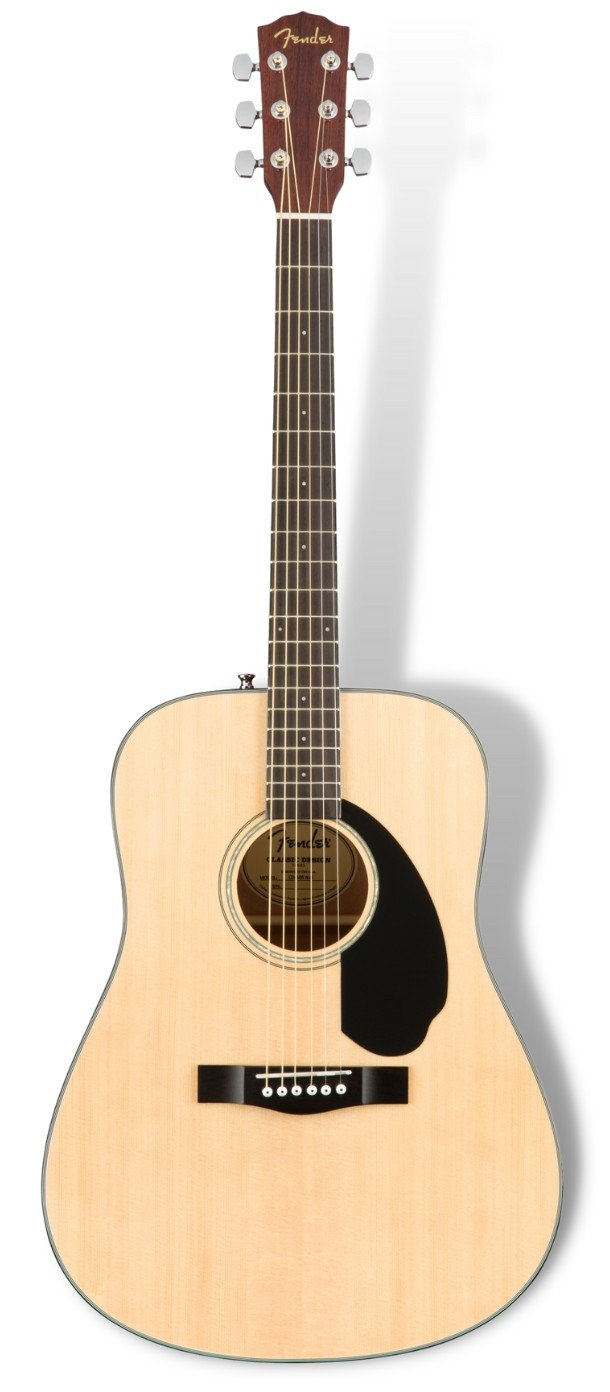
The Fender CD-60S is the guitar we recommend first to almost every beginner, and it is easy to hear why. The solid spruce top produces a clear, resonant tone with plenty of warmth, while the mahogany back and sides add a depth that cheaper laminated guitars simply cannot match. The classic dreadnought shape delivers bold projection and a full low end that flatters strumming.
For shoppers comparing the best acoustic guitars this year, Fender CD-60S deserves a place on the shortlist.
For anyone shortlisting the best acoustic guitars, Fender CD-60S is well worth a closer look.
What really sets the CD-60S apart is playability. Fender’s Easy to Play neck features rolled fingerboard edges that feel broken in from day one, so your fretting hand stays comfortable through longer practice sessions. The action is set low and friendly out of the box, which makes a huge difference while your fingertips are still building calluses. Fit and finish punch well above the price, with clean binding, smooth frets and tuning machines that hold pitch reliably.
Key features:
- Solid spruce top for clear, resonant tone
- Mahogany back and sides for warmth and depth
- Easy to Play neck with rolled fingerboard edges
- Classic dreadnought body with bold projection
- Low, beginner friendly action straight out of the box
- Dependable tuning machines that hold pitch well
Pros:
- Outstanding tone and build quality for the price
- Very comfortable neck, ideal for new players
- Stays in tune well and needs minimal setup
Cons:
- No built in electronics, purely acoustic
- Dreadnought body may feel large for smaller players
2. Yamaha FG800
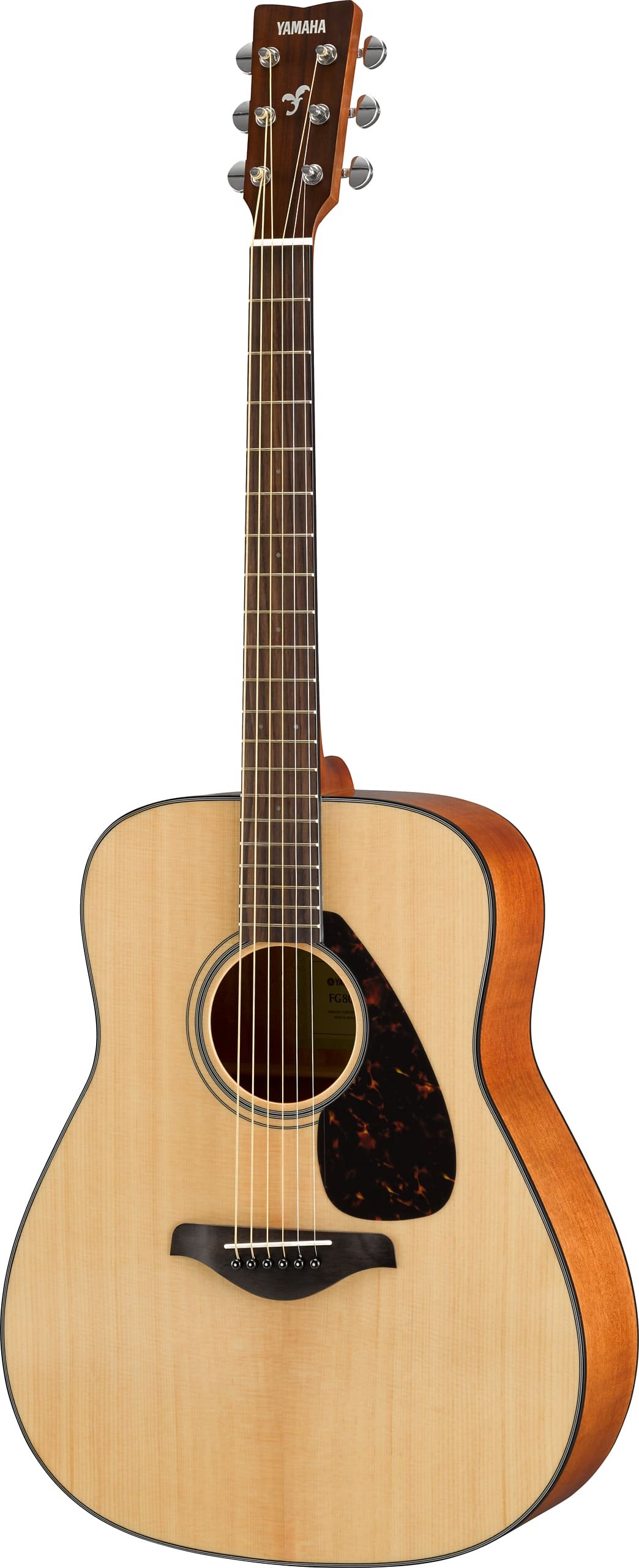
The Yamaha FG800 has been a best seller for years because it gets the fundamentals brilliantly right. Its solid spruce top is paired with nato and okoume back and sides in the traditional western body shape that Yamaha has refined over five decades. Scalloped bracing opens up the top for a louder, richer voice with a sweet midrange that suits strumming and fingerpicking in equal measure.
Overall, Yamaha FG800 stands out as a dependable acoustic guitars choice for everyday use.
Yamaha FG800 earns its place as a trusted acoustic guitars option in this roundup.
In side by side comparisons the FG800 consistently sounds more expensive than it is, with a balanced tone that records well and sits nicely in a mix. The neck feels slim and fast without being cramped, and Yamaha’s quality control is famously consistent, so the guitar you receive plays well straight away. It is a genuine step up instrument that many players keep as a second guitar long after they upgrade to something pricier.
Key features:
- Solid spruce top with scalloped bracing
- Nato and okoume back and sides
- Traditional western dreadnought body
- Slim, comfortable neck profile
- Famously consistent Yamaha build quality
- Strong, balanced projection
Pros:
- Remarkable tone for the money
- Versatile across strumming and fingerstyle
- Durable build that lasts for years
Cons:
- No electronics on the standard model
- Plain looks next to flashier rivals
- Full size body can feel bulky for children
3. Taylor 214ce
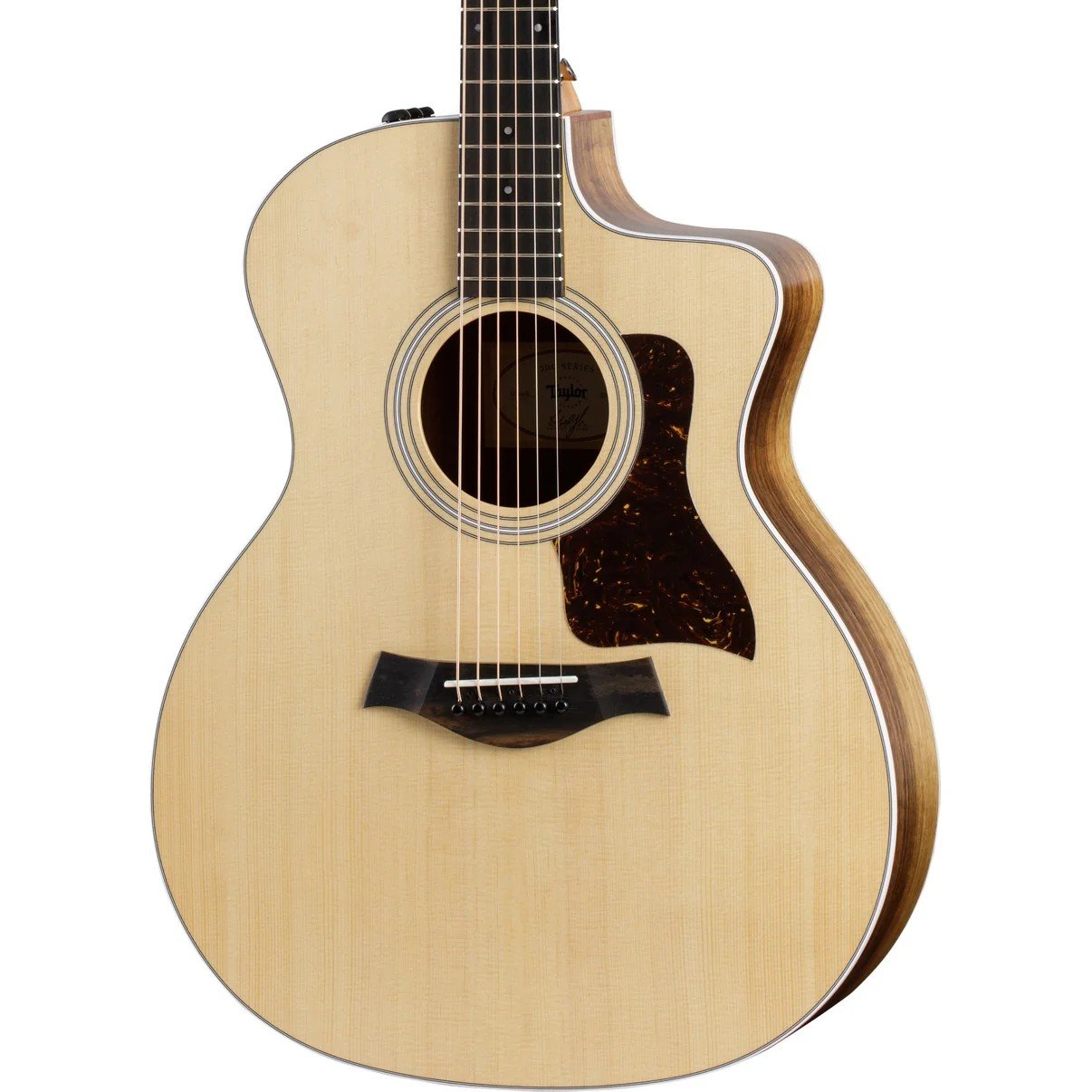
The Taylor 214ce is where serious players start to feel the Taylor magic. The Grand Auditorium body shape is Taylor’s most versatile design, comfortable enough for fingerstyle yet powerful enough for strumming, and the solid spruce top gives it a bright, articulate voice with sparkling highs. Layered rosewood back and sides add visual richness and a touch of low end warmth.
If acoustic guitars quality is your top priority, Taylor 214ce is easy to recommend.
When it comes to reliable acoustic guitars, Taylor 214ce consistently gets high marks from owners.
The real headline is the ES2 Expression System electronics, which capture the guitar’s natural acoustic tone with impressive fidelity when plugged in. Taylor’s slim neck profile and low action make the 214ce one of the easiest playing guitars in its class, and the Venetian cutaway gives full access to the upper frets. It arrives stage ready with a padded gig bag, making it a superb choice for performing singer songwriters.
Key features:
- Solid spruce top with layered rosewood back and sides
- Grand Auditorium body, versatile across styles
- ES2 Expression System pickup for live use
- Venetian cutaway for upper fret access
- Slim Taylor neck with low, fast action
- Includes a padded Taylor gig bag
Pros:
- Beautiful, articulate tone with superb clarity
- Excellent plugged in sound for gigging
- Superb playability straight out of the box
Cons:
- Layered rather than solid back and sides
- Premium price within its range
- Bright tone may not suit traditionalists
4. Martin D-28
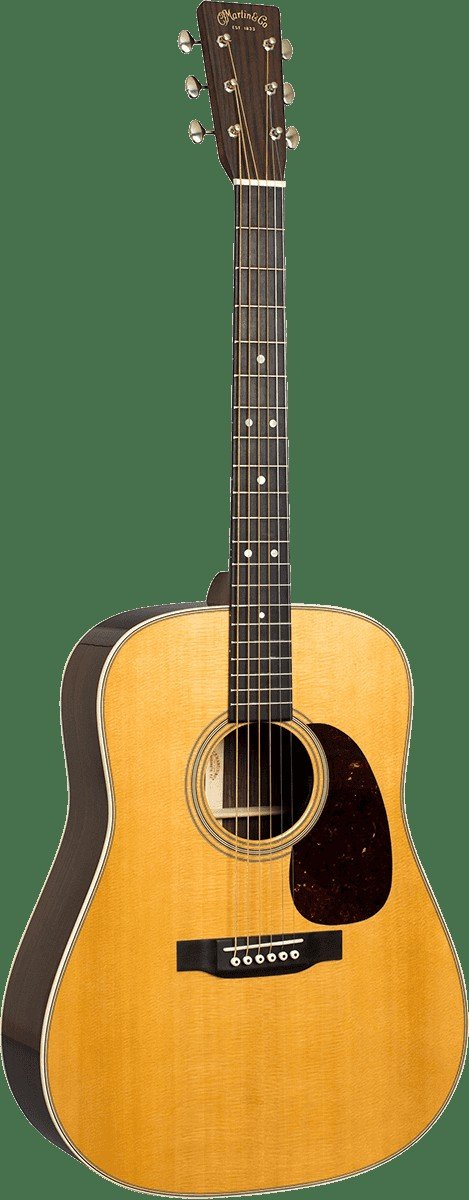
The Martin D-28 is not just a guitar, it is the blueprint for the modern dreadnought. Since the 1930s this model has defined what an acoustic guitar should sound like, with a solid spruce top and East Indian rosewood back and sides producing that famous deep, powerful voice. The 25.4 inch scale length adds string tension and projection, giving the D-28 its legendary volume and headroom.
Among this year’s acoustic guitars options, Martin D-28 offers a strong balance of quality and value.
Buyers who want proven acoustic guitars performance will find a lot to like in Martin D-28.
Played hard it roars, played gently it sings. The bass is rich without becoming muddy, the trebles ring clear, and the whole instrument seems to open up the longer you own it. Hand built in Nazareth, Pennsylvania, the D-28 carries fit and finish worthy of its heritage. This is a lifetime instrument and a genuine investment, equally at home on festival stages and in recording studios.
Key features:
- Solid spruce top with East Indian rosewood back and sides
- Iconic dreadnought body, the original blueprint
- 25.4 inch scale for power and projection
- Forward shifted X bracing for open, resonant tone
- Hand built in the USA
- Rich, dynamic voice that improves with age
Pros:
- Legendary tone, the benchmark for dreadnoughts
- Superb craftsmanship and premium materials
- Holds its value well as a long term investment
Cons:
- High price puts it out of reach for many
- No electronics fitted as standard
- Large body may overwhelm smaller players
5. Epiphone Songmaker DR-100
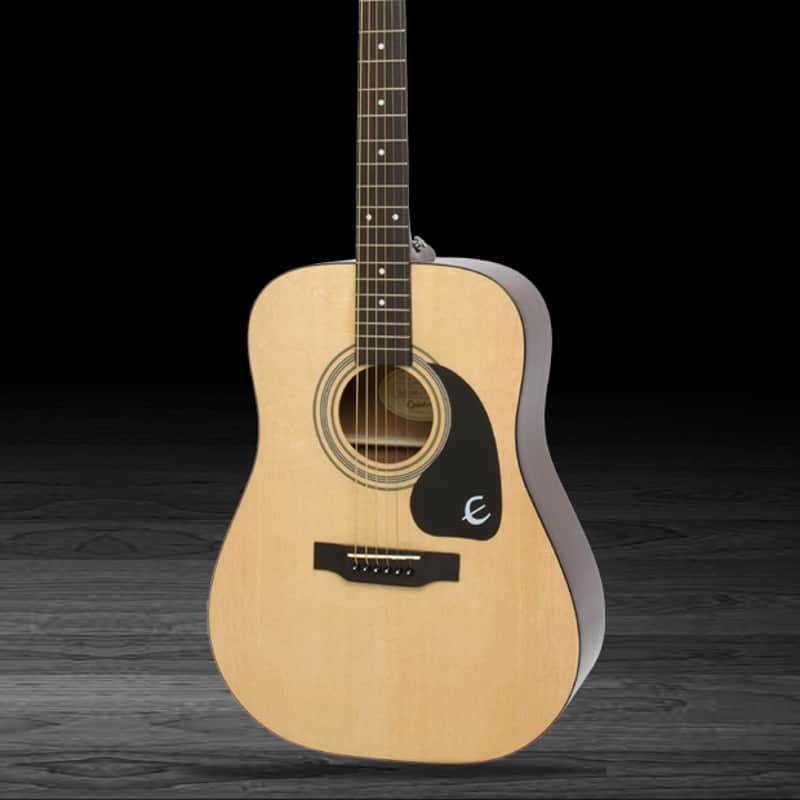
The Epiphone Songmaker DR-100 proves you do not need to spend much to start playing properly. This square shoulder dreadnought pairs a select spruce top with a mahogany body for a warm, mellow tone that flatters beginners and casual strummers alike. The SlimTaper neck feels fast and comfortable in smaller hands, which makes chord changes easier in those crucial first months.
Epiphone Songmaker DR-100 remains one of the most popular acoustic guitars picks with buyers.
Epiphone Songmaker DR-100 rounds out our acoustic guitars selection as a solid all round performer.
While it cannot match the resonance of solid wood instruments, the DR-100 sounds far better than its price suggests, with decent projection and a smooth, easy response. The finish is tidy, the hardware is dependable and the guitar arrives playable with only minor setup needed. For anyone on a tight budget, or buying a first guitar for a child, it is one of the smartest buys in this entire guide.
Key features:
- Select spruce top with mahogany body
- Square shoulder dreadnought shape
- SlimTaper neck, comfortable for small hands
- Warm, mellow tone ideal for strumming
- Tidy finish and dependable hardware
- Exceptional value for beginners
Pros:
- Very affordable without sounding cheap
- Easy playing neck suits new guitarists
- Solid, reliable build for the price
Cons:
- Laminated top limits resonance and depth
- Tone lacks the complexity of solid wood models
- No electronics option on this model
6. Ibanez AW54

The Ibanez AW54 stands out with its solid okoume top, an unusual choice that gives this dreadnought a distinctive warm and woody voice. Paired with an okoume body and finished in a natural open pore satin, the AW54 looks understated and feels wonderfully organic in the hands, with the wood grain visible through the thin finish.
For anyone shortlisting the best acoustic guitars, Ibanez AW54 is well worth a closer look.
For shoppers comparing the best acoustic guitars this year, Ibanez AW54 deserves a place on the shortlist.
Tonally it sits somewhere between mahogany and spruce, offering a mellow midrange that fingerpickers will love and enough clarity for confident strumming. The neck is slim and quick in typical Ibanez fashion, making it a great crossover choice for electric players moving to acoustic. Build quality is excellent for the price, and the open pore finish lets the wood breathe and resonate freely.
Key features:
- Solid okoume top for warm, woody tone
- Okoume back and sides
- Natural open pore satin finish
- Classic dreadnought body shape
- Slim Ibanez neck, great for electric converts
- Distinctive, organic look and feel
Pros:
- Unique warm tone at a modest price
- Comfortable, fast neck
- Beautiful natural wood finish
Cons:
- Satin finish shows wear more easily
- Less bright than spruce top rivals
- No built in pickup system
7. Seagull S6 Original
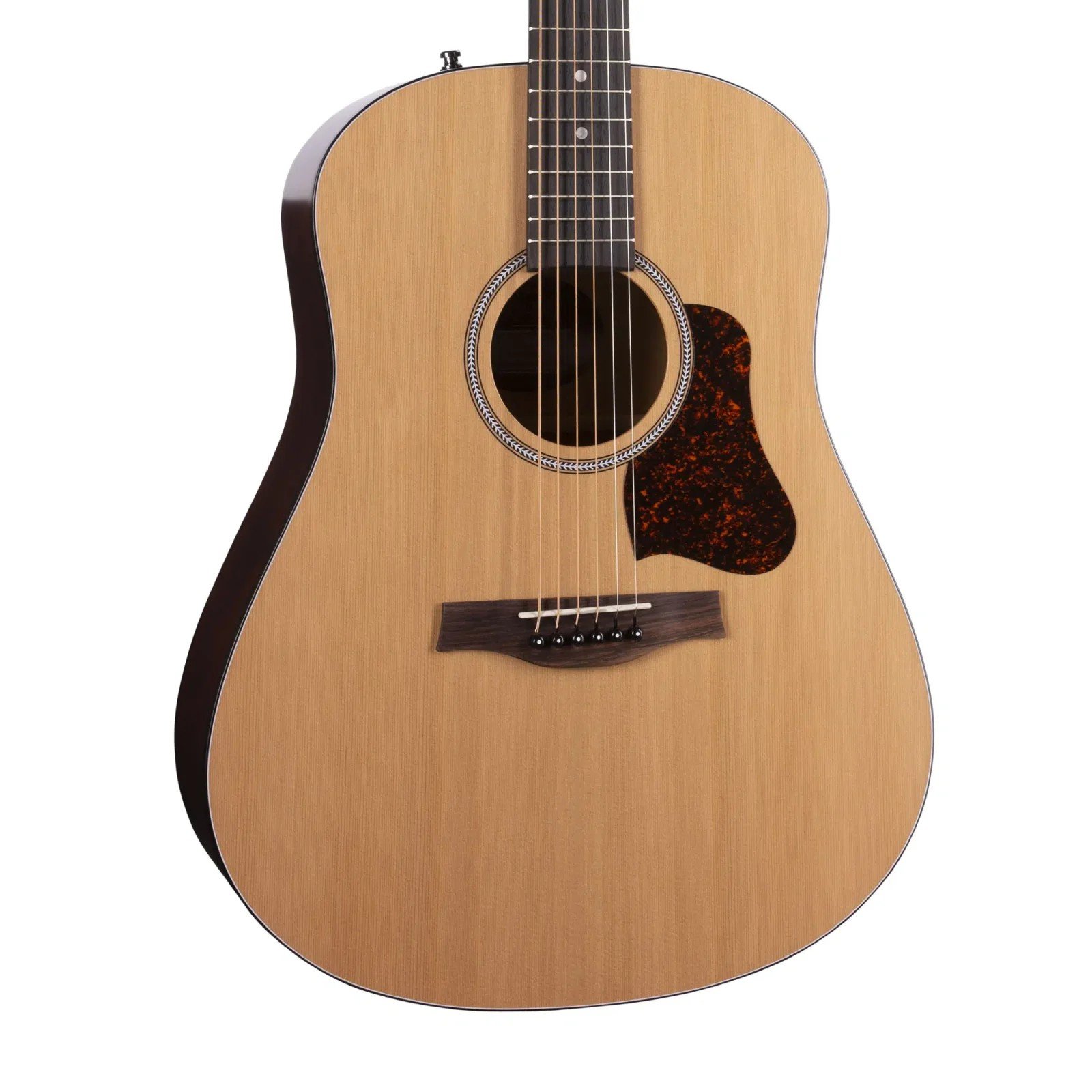
Handcrafted in Canada, the Seagull S6 Original has a devoted following among players who value character over brand prestige. Its solid cedar top is the star of the show, delivering a warm, broken in sound from the very first strum, with a responsiveness that makes it a dream for fingerstyle players. Wild cherry back and sides add a sweet, mellow voice with attractive grain figuring.
Seagull S6 Original earns its place as a trusted acoustic guitars option in this roundup.
Overall, Seagull S6 Original stands out as a dependable acoustic guitars choice for everyday use.
The wider nut width gives your fingers extra room for complex chords and fingerpicking patterns, while the silver leaf maple neck stays stable through changing seasons. Seagull’s build quality is superb, with flawless fretwork and a finish that lets the wood sing. If you want a guitar with soul that stands apart from the usual suspects, the S6 Original deserves a long look.
Key features:
- Solid cedar top, warm from day one
- Wild cherry back and sides
- Handcrafted in Canada
- Wider nut width for fingerstyle comfort
- Silver leaf maple neck for stability
- Superb fretwork and build quality
Pros:
- Rich, mature tone with no break in period
- Excellent for fingerstyle playing
- Distinctive alternative to the big brands
Cons:
- Cedar top dents more easily than spruce
- Wider neck may not suit small hands
- Plainer styling than some rivals
8. Takamine GD93CE
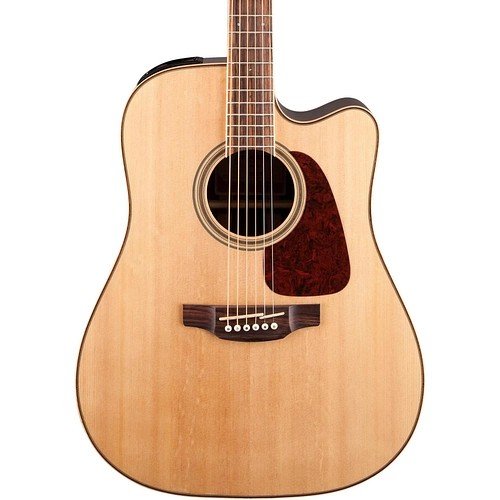
The Takamine GD93CE is built for the stage. This cutaway dreadnought combines a solid spruce top with walnut back and sides for a balanced, articulate tone, and the onboard TK-40D preamp with built in tuner delivers a polished plugged in sound that sound engineers love. Takamine’s electronics are rightly famous, and this system offers warm, feedback resistant tone with easy on stage control.
When it comes to reliable acoustic guitars, Takamine GD93CE consistently gets high marks from owners.
If acoustic guitars quality is your top priority, Takamine GD93CE is easy to recommend.
Unplugged, the GD93CE still impresses, with clear projection and a sweet top end that cuts through a band mix. The cutaway grants easy access to the upper frets for lead work, and the slim neck profile keeps fast passages comfortable. With its elegant appointments and stage ready electronics, it is one of the best value performance acoustics you can buy.
Key features:
- Solid spruce top with walnut back and sides
- Cutaway dreadnought body for upper fret access
- TK-40D preamp with built in tuner
- Warm, feedback resistant stage tone
- Slim, fast neck profile
- Elegant appointments and binding
Pros:
- Outstanding electronics for live performance
- Strong acoustic tone even unplugged
- Great value for a stage ready guitar
Cons:
- Heavier than purely acoustic rivals
- Battery changes needed for the preamp
- Gloss finish shows fingerprints easily
9. Gibson J-45 Standard
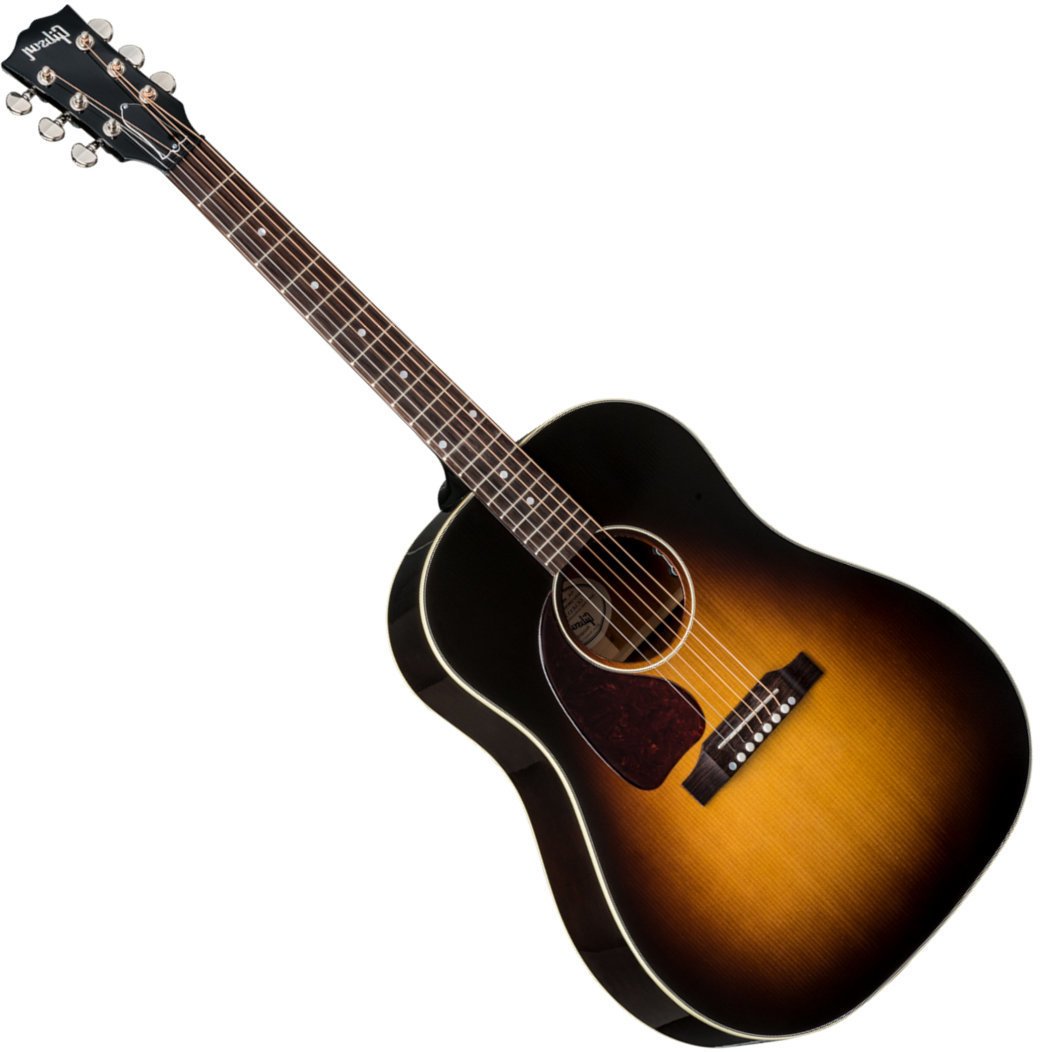
The Gibson J-45 has been called the workhorse for good reason. This round shoulder dreadnought pairs a Sitka spruce top with mahogany back and sides for a warm, punchy voice with a distinctive midrange growl that sits perfectly in a mix. From folk to rock to country, the J-45 has shaped countless records since its debut in 1942.
Buyers who want proven acoustic guitars performance will find a lot to like in Gibson J-45 Standard.
Among this year’s acoustic guitars options, Gibson J-45 Standard offers a strong balance of quality and value.
The short scale length gives it a slinkier feel with slightly softer string tension, making it exceptionally comfortable for long sessions and expressive bending. The included LR Baggs VTC pickup means it is ready for the stage or studio straight away. Built in Bozeman, Montana, the J-45 Standard carries the mojo, craftsmanship and heritage that only Gibson can offer.
Key features:
- Sitka spruce top with mahogany back and sides
- Round shoulder dreadnought, the classic workhorse
- Short scale for slinky, comfortable feel
- LR Baggs VTC pickup fitted as standard
- Hand built in Bozeman, Montana
- Iconic midrange voice heard on countless records
Pros:
- Legendary warm, punchy tone
- Very comfortable to play for hours
- Stage ready with quality pickup included
Cons:
- Premium Gibson price tag
- Short scale offers slightly less projection
- Setup can vary between individual examples
10. Taylor GS Mini
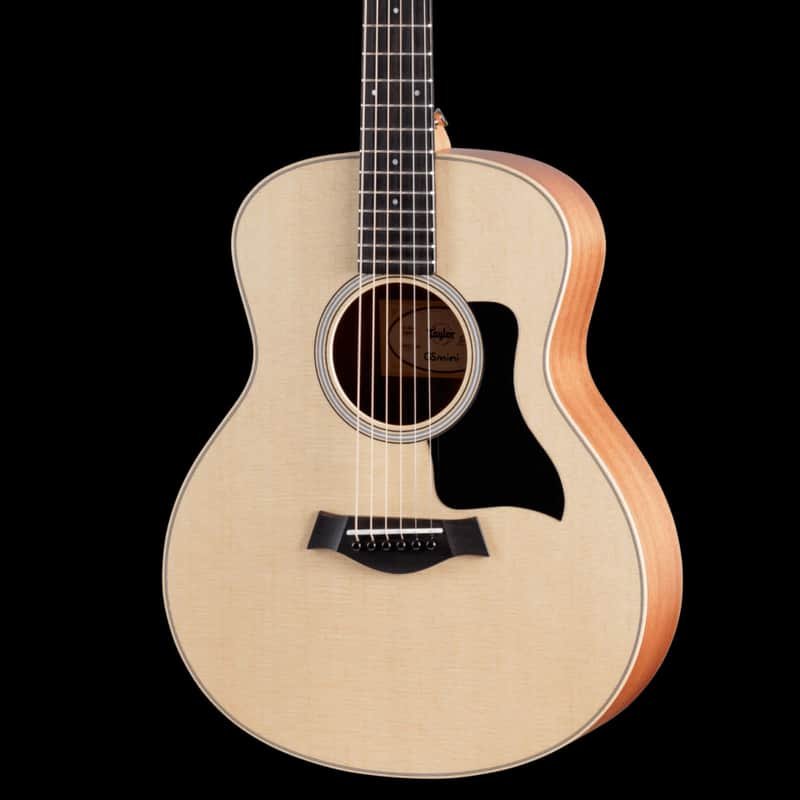
The Taylor GS Mini redefined what a small guitar can be. Despite its compact body and short scale, it produces a remarkably full and balanced sound that embarrasses many full size guitars. The solid spruce top paired with layered sapele back and sides delivers the bright, clear Taylor voice in a package you can take anywhere.
Taylor GS Mini rounds out our acoustic guitars selection as a solid all round performer.
Taylor GS Mini remains one of the most popular acoustic guitars picks with buyers.
It is the ultimate travel and couch guitar, small enough for airline overhead bins yet serious enough for writing sessions and even recording. Playability is pure Taylor, with a slim neck and low action that beginners love and professionals respect. It ships with a quality gig bag, proving that great tone does not require a big body. The GS Mini makes a perfect second guitar, or a brilliant first instrument for younger players.
Key features:
- Compact body with short scale length
- Solid spruce top, layered sapele back and sides
- Surprisingly full, balanced tone
- Ideal for travel, writing and practice
- Slim Taylor neck with low action
- Includes a quality gig bag
Pros:
- Big sound from a small, portable body
- Superb playability for all levels
- Excellent build quality and finish
Cons:
- Short scale changes string feel and tension
- Less low end than full size dreadnoughts
- Costs more than many full size beginner guitars
Buying Guide: How to Choose the Best Acoustic Guitars
Body shape matters more than you think. Dreadnoughts like the Fender CD-60S, Yamaha FG800 and Martin D-28 are loud and full, with strong bass that suits strumming and flatpicking. Grand Auditorium shapes such as the Taylor 214ce are more balanced and comfortable, while compact guitars like the Taylor GS Mini are perfect for travel, smaller players and relaxed sofa sessions.
A solid top makes the biggest tonal difference. The single most important feature on any acoustic guitar is a solid wood top, usually spruce or cedar. Solid tops vibrate more freely than laminated ones, producing richer tone that improves with age. Every guitar on this list except the budget Epiphone has one, which is why even the affordable picks here sound far better than no name laminated guitars.
Playability keeps you practising. A guitar that fights you will end up in a corner. Look for comfortable neck profiles, low action and smooth fret edges, all areas where the Fender CD-60S and Taylor models excel. Beginners should also consider body size, since a large dreadnought can be tiring for children or smaller adults.
Consider electronics if you will perform. If you plan to play gigs, open mics or record, an acoustic electric with a built in pickup saves you buying a separate system later. The Takamine GD93CE, Taylor 214ce and Gibson J-45 Standard all come stage ready, while purely acoustic models can be fitted with an aftermarket pickup further down the line.
Set a budget and trust your ears. You can start happily with the Epiphone DR-100 or Fender CD-60S, step up to the sweet spot of the Yamaha FG800 and Seagull S6, or invest in a lifetime instrument like the Martin D-28 or Gibson J-45. Wherever you land, play before you buy if you can, because the guitar that inspires you to pick it up daily is always the right choice.
Keep researching the best acoustic guitars with our related guides to the best electric guitars and best guitar amps. For useful background on acoustic guitars, the Musical instrument on Wikipedia article is worth a read.
In a hurry? Here is the bottom line on acoustic guitars: choose a proven acoustic guitars brand, match the acoustic guitars to your needs, and do not overpay for acoustic guitars features you will never use. Every acoustic guitars pick above clears that bar.
Frequently Asked Questions
How much should a beginner spend on an acoustic guitar? For more detail on acoustic guitars, see the buying guide above.
Plan on spending enough to get a solid top guitar from a reputable brand, which usually means the price range of the Fender CD-60S or Yamaha FG800. Cheaper guitars often have high action and poor tuning stability that make learning harder than it needs to be. For more detail on acoustic guitars, see the buying guide above.
What is the difference between solid and laminated tops?
A solid top is cut from a single piece of wood and vibrates freely, giving richer tone that opens up with age. A laminated top is made from thin layers of wood pressed together, which is cheaper and tougher but sounds flatter and never improves over time.
Do I need an acoustic electric guitar?
Only if you plan to perform live or record through a PA system. For home practice and learning, a purely acoustic guitar sounds just as good and costs less. You can always add an aftermarket pickup later if your needs change.
How often should I change acoustic guitar strings?
For regular players, every one to three months keeps the tone bright and the intonation accurate. If your strings look dull, feel rough or will not stay in tune, they are overdue. Beginners often notice their guitar suddenly sounds much better after the first string change.
Is a dreadnought too big for a small player?
It can be. Dreadnoughts are large and deep, which some smaller adults and children find uncomfortable. If that sounds like you, look at the Taylor GS Mini or a Grand Auditorium model instead, both of which are far easier to hold while still sounding full.
Conclusion
The best acoustic guitar for you depends on your budget, your hands and the music you want to play. For unbeatable beginner value, the Fender CD-60S and Yamaha FG800 are almost impossible to beat, offering solid tops and easy playability for very little money. The Epiphone DR-100 is the pick for the tightest budgets, while the Ibanez AW54 and Seagull S6 Original offer distinctive voices for players who want something different.
If you are ready to step up, the Taylor 214ce and Takamine GD93CE are superb stage ready instruments, and the Taylor GS Mini is the perfect travel companion. For a once in a lifetime purchase, the Martin D-28 and Gibson J-45 Standard remain the icons against which all other acoustic guitars are judged.
Whichever you choose, every guitar on this list will reward regular practice with great tone. Pick the one that feels right, keep it in tune, and enjoy the journey.
In short, the best acoustic guitars is the one that fits your needs and budget. Use the reviews above to compare the leading acoustic guitars options side by side, then pick the acoustic guitars that you will enjoy using for years to come.

1 thought on “10 Best Acoustic Guitars – Top Picks for Beginners”